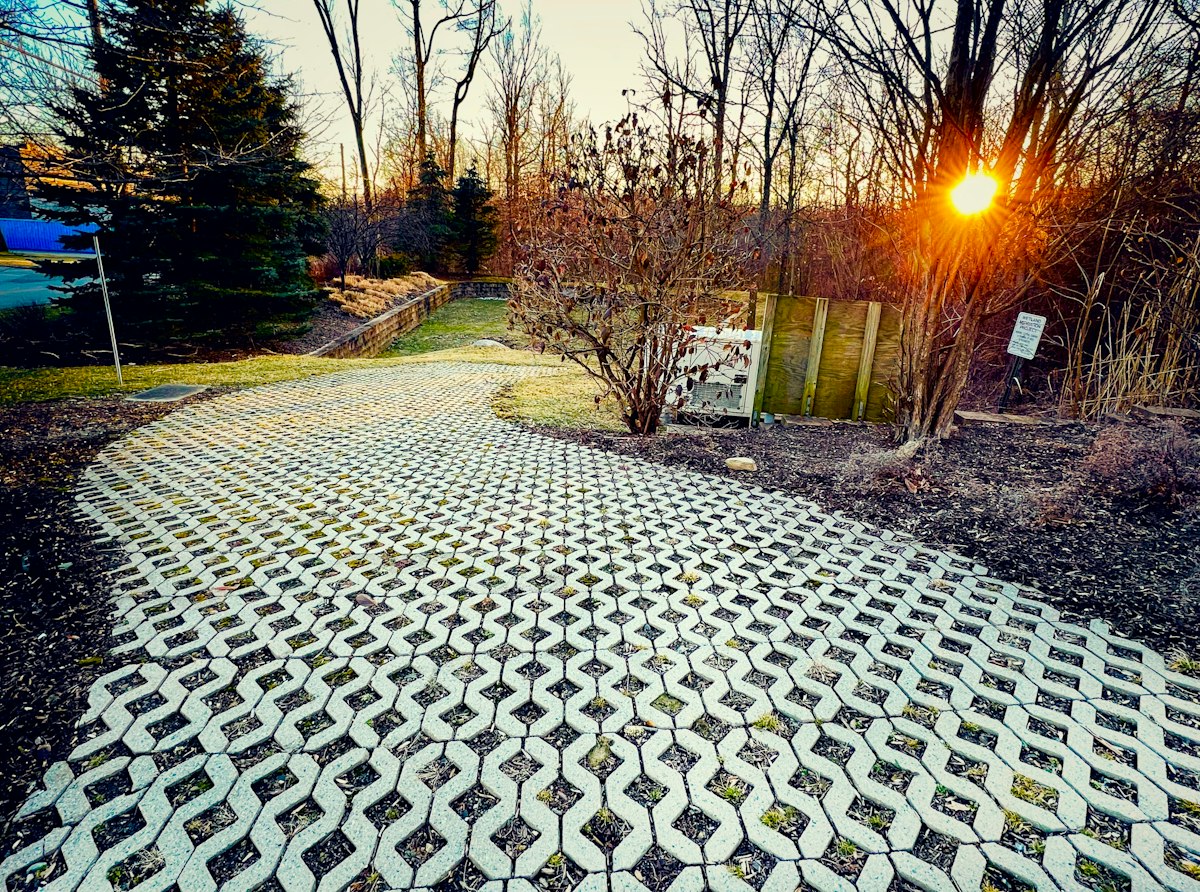
Technical Requirements for Residential Permeable Paver Driveway Projects
Homeowners often turn to permeable pavement systems when faced with persistent puddles, strict local runoff regulations, or a desire for a more environmentally conscious landscape. Unlike traditional asphalt or solid concrete, these systems allow rainwater to filter through the surface and into the ground below. This process mimics natural hydrology and reduces the strain on municipal storm sewers. However, achieving this performance requires adhering to specific engineering standards that differ significantly from standard hardscaping.
Success starts with understanding that the pavers themselves are only the visible portion of a complex drainage engine. The real work happens beneath the surface in the layered stone reservoir. If these layers are not constructed to exact specifications, the system can clog, sag, or fail to manage heavy rainfall. For a homeowner, knowing these technical requirements is the best way to vet contractors and ensure the longevity of a significant property investment.
Related posts

Beautiful Decorative Stamped Asphalt Driveway Design Options
Homeowners looking to upgrade their driveway often feel stuck between two difficult extremes. Standard blacktop asphalt looks functional...
Read more →
Heavy Duty Driveway Drainage: Mastering Trench Drain Installation for High-Traffic Zones
Torrential rains combined with heavy vehicle traffic can quickly turn a standard residential driveway into a failing structural...
Read more →
A Look At Stone Masonry Exterior Foundation Facing Panels
That strip of exposed concrete at the base of your home often acts as a visual anchor, but...
Read more →
Timing Your Commercial Brick Repointing and Mortar Restoration Project
Most commercial property owners overlook the mortar between their bricks until a chunk of masonry falls onto a...
Read more →This article outlines the structural and material standards necessary for a functional permeable driveway. We will examine the specific stone sizes required, the preparation of the soil subgrade, and the importance of edge restraints. By the end of this overview, you will have the vocabulary and the knowledge to oversee a project that balances aesthetic appeal with high-performance stormwater management.
Key takeaways
- Permeable systems rely on open-graded aggregates without "fines" or dust to maintain water flow.
- Soil infiltration testing is mandatory to determine if an underdrain system is required for heavy clay environments.
- The reservoir layer must be thick enough to support vehicle weights while providing adequate water storage capacity.
- Standard bedding sand is never used in these installations; only specific washed stone chips are acceptable for the joints.
The Foundation: Subgrade Preparation and Soil Testing
Before any stone is delivered, the existing soil—known as the subgrade—must be evaluated. The ability of your soil to absorb water dictates the entire design of the driveway. In sandy soils, the water may dissipate quickly, allowing for a simpler design. In heavy clay soils, the infiltration rate might be so slow that the driveway acts more like a storage tank, requiring an overflow pipe to prevent the system from backing up during back-to-back storms.
Contractors should perform a percolation test to measure how many inches of water the soil can absorb per hour. If the rate is less than 0.5 inches per hour, your installation specifications should include a perforated underdrain. This pipe sits at the bottom of the stone reservoir and carries excess water to a legal discharge point, such as a dry well or the street's storm system. Skipping this step in clay-heavy areas often leads to a saturated base that loses its structural strength over time.
Compaction is another area where permeable specs differ from traditional ones. While you want a solid foundation, over-compacting the soil can seal off the pores and prevent drainage. The goal is to reach a balance—usually around 92% to 95% Proctor density—that supports the weight of a vehicle without turning the soil into an impermeable shelf.
The Three-Layer Aggregate Reservoir
The core of a permeable paver driveway is the "open-graded" stone base. Standard driveways use "dense-graded" stone, which contains a mix of large rocks and fine dust that packs together tightly. In a permeable system, you must use washed stones that have had all the dust removed. This creates large voids (pores) between the rocks where water can be stored. There are typically three distinct layers of stone involved.
The Sub-base (ASTM No. 2 or No. 3 Stone)
This is the deepest layer and provides the primary structural support and water storage. It usually consists of 2-inch to 3-inch crushed, angular stone. For a standard passenger vehicle driveway, this layer is typically 6 to 12 inches thick. If you plan to park a heavy RV or have delivery trucks frequenting the driveway, this depth may need to increase. The angularity of the stone is important; rounded river rocks will roll and shift, whereas crushed stone locks together to create a stable platform.
The Base Layer (ASTM No. 57 Stone)
Sitting directly above the sub-base is the base layer, usually made of 1-inch crushed stone. This layer acts as a transition zone. It is small enough to provide a smoother surface for the next layer but large enough to maintain high porosity. This layer is typically 4 inches thick and must be compacted with a heavy vibratory roller to ensure the stones are fully interlocked before the final bedding layer is applied.
The Bedding Layer (ASTM No. 8 Stone)
The topmost layer of stone is the bedding layer, consisting of 1/4-inch to 3/8-inch washed stone chips. This layer is only about 1.5 to 2 inches thick. Its job is to provide a perfectly level surface for the pavers to sit on. Because these stones are small, they can be screeded to a flat plane, much like sand is used in traditional installations. However, unlike sand, No. 8 stone will not wash away or clog the system.
Paver Selection and Joint Fill Requirements
Not every paver is suitable for a permeable installation. Permeable pavers are designed with wider joints or specialized notches that create gaps between the units. These gaps are where the water enters the system. The pavers themselves should be at least 80mm (3.15 inches) thick for driveway applications to handle the torque and weight of turning vehicles.
Once the pavers are laid, the joints must be filled. This is a common point of failure for DIY projects. You must never use polymeric sand or standard masonry sand in the joints of a permeable driveway. These materials will seal the surface and defeat the purpose of the installation. Instead, use the same No. 8 stone chips used in the bedding layer. These chips allow water to pour straight through the joints while providing the necessary lateral friction to keep the pavers from shifting.
Edge Restraints and Containment
Because the stone base is open-graded and contains no "glue" like clay or dust, the entire system wants to spread outward under the weight of a car. Robust edge restraints are mandatory to keep the pavers tightly packed. Without them, the joints will open up, the stones will migrate, and the driveway will eventually unravel.
For residential driveways, a reinforced concrete curb is the gold standard. It provides a permanent, immovable barrier. If a concrete curb isn't in the budget, heavy-duty plastic or aluminum edging secured with extra-long steel spikes can work, provided they are installed directly onto the compacted No. 57 stone base rather than on top of the soil. The edging must be strong enough to withstand the lateral pressure exerted by a two-ton vehicle turning its wheels.
Maintenance Standards for Longevity
How do you keep a permeable driveway working for 20 years? The primary enemy is "fines"—silt, organic debris, and sand that can blow onto the driveway and clog the stone joints. If the joints become clogged, the water will simply run off the surface as if it were solid concrete. Homeowners should plan to inspect the joints annually.
Basic maintenance involves using a leaf blower to remove debris before it breaks down and gets washed into the gaps. If you notice water pooling in certain spots, it is likely time to remove the top layer of joint stone and replace it with fresh, clean No. 8 chips. In most residential settings, a deep cleaning with a specialized vacuum truck is only necessary every 5 to 10 years, depending on the tree canopy and local environment.
Frequently Asked Questions
Can I install permeable pavers over an existing concrete driveway?
No, this is not recommended. Permeable pavers require a deep, porous stone reservoir to function. Installing them over a solid concrete slab would trap water between the pavers and the concrete, leading to structural instability, mold, and potential freeze-thaw damage that would heave the pavers.
Do permeable driveways work in cold climates with snow?
They actually perform better than traditional asphalt in many cases. Because the surface drains so quickly, there is less water available to turn into ice. This reduces the need for salt and de-icing chemicals. Furthermore, the air voids in the stone base act as an insulation layer, which can help reduce frost heave issues common in solid pavements.
Are permeable pavers more expensive than standard pavers?
Generally, yes. The material costs for the pavers are similar, but the excavation is often deeper, and the specialized washed stone aggregates are more expensive than standard gravel. You can expect to pay a 20% to 30% premium over a non-permeable paver installation, though this is often offset by the fact that you may not need to install separate drains, catch basins, or expensive regrading solutions.
What happens if the soil under the driveway is pure clay?
In pure clay scenarios, the system is designed as a "partial infiltration" or "no infiltration" system. This involves wrapping the stone reservoir in an impermeable liner or using a perforated underdrain pipe. The driveway still collects and cleans the water, but instead of soaking into the clay, the water is slowly released into the municipal storm system at a controlled rate.
Conclusion
Building a permeable paver driveway is an investment in both your property's aesthetics and its environmental impact. By adhering to strict installation specifications—including the use of open-graded aggregates, proper soil testing, and heavy-duty edge restraints—you ensure that your driveway remains stable and functional for decades. While the technical requirements are more demanding than traditional paving, the reward is a high-performance surface that manages stormwater naturally and stands up to the rigors of daily vehicle use. Always verify that your chosen contractor is familiar with these specific stone graduations and understands the necessity of a dust-free base.